
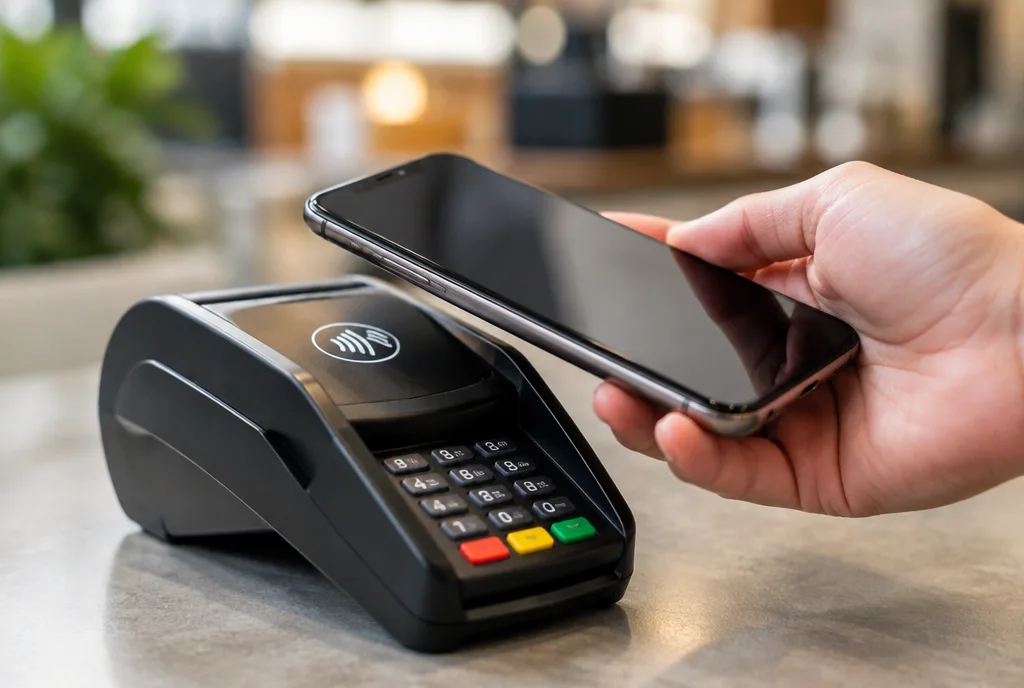
Near Field Communication, or NFC, is an emerging mobile technology that has gotten a lot of attention over the past year. As the name implies, it allows devices to communicate when in close proximity to one another and has one of the largest tech companies in the world, Google, backing it.
NFC was developed in 2004 but is only recently becoming known to the public. It works by forming a secure virtual link between devices, thereby allowing them to share information. How and what information is shared is up to the devices with some being set to send, some just to receive, and others to do both. This adaptability makes NFC very easy to customize in terms of use and allows for a ton of potential.
One of the most developed uses for this technology is a payment solution designed by Google, aptly named Google Wallet. It allows a consumer the ability to pay for a purchase simply by waving their phone over a receiver at a store. Once the link between the receiver and phone is formed, software on the phone will ask the consumer if they wish to pay that amount of money. Other uses being developed include the ability to open keyless locks and scan NFC tags that can be placed almost anywhere.
NFC tags are worth elaborating on because the potential for them is almost unlimited. The concept is that an electronic tag can be placed on anything and once you connect your phone to the tag, you are provided with the information the person who placed the tag wants you to see. Real world applications could include details for art in a museum or features of electronics in a store.
The test for Near Field Communication will be if the average consumer sees the benefit in utilizing the technology. However, with some big names backing it and more and more phones including it as a feature, the chances of widespread acceptance are good.