
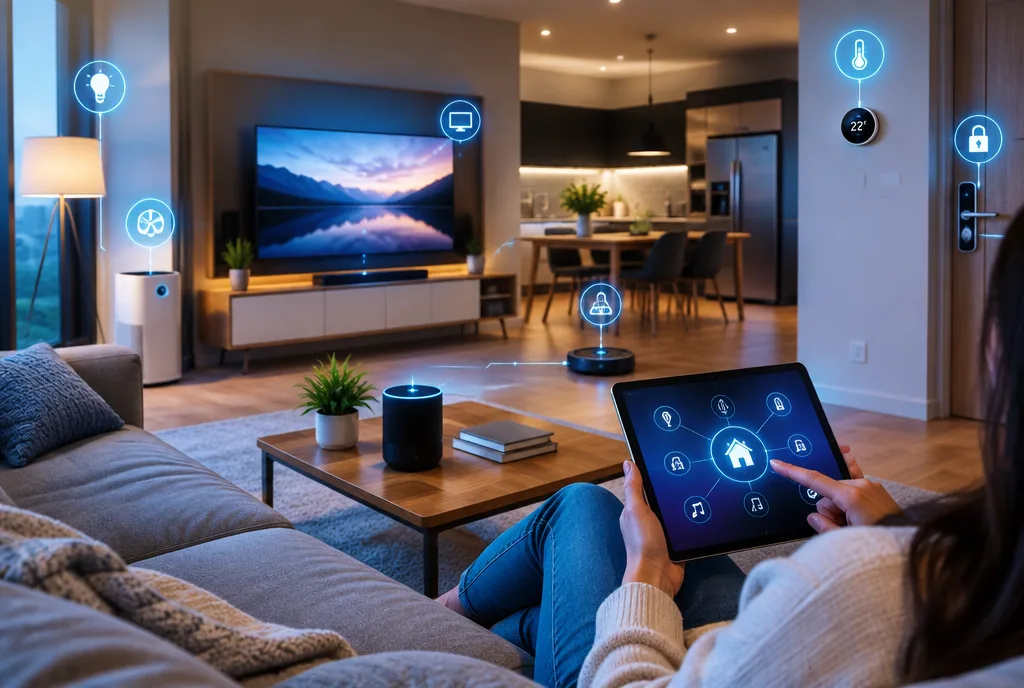
Even though smart home technology is in its infancy, it is already changing. The original smart home technology is oriented toward applications on phones or individual web applications. Each application tends to have its own niche: entertainment technology, thermostat, security and so forth. Newer applications are cloud-based technology that can do all of these things and more.
The rise of this cloud-based technology is driven by large home improvement chains. Their motives in combining the features is obvious. If they can capture the market, they can link their products to the applications. Then they can sell the entire package to consumers, to individual contractors and to businesses.
This development also signals a move away from a single technology. Right now apps tend to be tied to one operating system. This cloud-based technology allows the use of a PC, laptop, tablet, or phone. It also doesn’t limit the operating system to the current Apple iPhone or the Android. This could add flexibility to the market as consumers demand these capabilities from their phone apps.
Smart home technology operates via broadband. This makes it capable of ‘talking to’ any electronic item. Many items may have to be specially programmed to allow this, and that’s where the home improvement stores are hoping to make big money. They will be offering HVAC, appliances, lighting, security and other systems that are designed to specifically interact with broadband. Savvy consumers are already purchasing these items to be ready for smart home technology changes.
Smart home apps save energy on heating, cooling, appliance usage and lighting. This means that the smart home apps are “green”, and that is a big part of their appeal. The new cloud-based technology can bring together all of the information on lights, appliances, thermostats, energy usage, and water usage. A home owner can use this information to become a better power consumer. It makes human error take a backseat to human ingenuity.
CLECs and the Telecommunications Act of 1996: what became of the competitive carriers
The 1996 Act opened local telephone markets to competition. A trade association filed the progress reports. What the competitive carriers achieved, why most of them failed and what survived.