
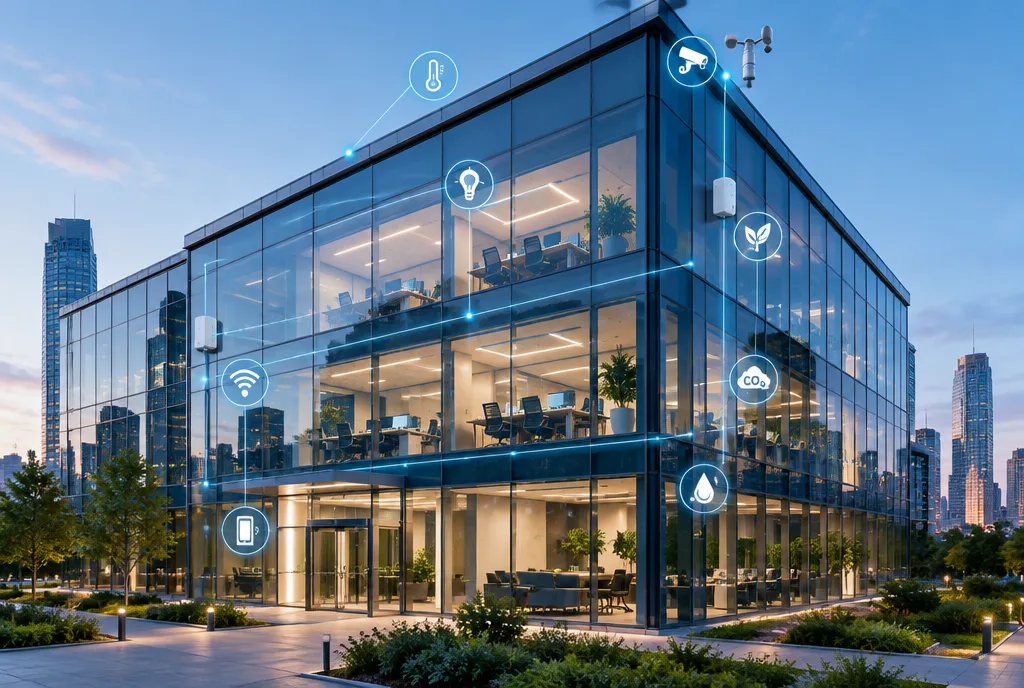
Building technology has evolved significantly over the past few decades. With many people pursuing green lifestyles, energy-conservation technology has become very popular with a growing segment of the population. The following guide explains how smart building technology can save money, promote a green environment and create a healthy living space.
Smart buildings incorporate a variety of tools to reduce energy loss and improve efficiency. One of the largest sources of energy loss in modern homes and buildings is through an air conditioning system. Many smart buildings incorporate technology that can minimize the use of an AC system. Through the use of motion detectors, a room is heated or cooled only when an individual is in it. Every year, billions of dollars are wasted heating parts of a vacant building. By heating only rooms when people are present, it’s possible to save money and promote a green environment.
Many smart buildings also include technology to reprocess water. Lots of water used in traditional skyscrapers and large apartments goes to waste. For example, a water fountain will often waste up to 60 percent of its drinking water. In addition, washing hands, excessive toilet flushing and outdoor landscaping can be a significant waste of water.
It’s possible to reprocess water for use elsewhere in a building. While ‘black water’ from a toilet or urinal can’t be reprocessed in a building, it’s often possible to reprocess ‘grey water’ from a water fountain, sink, shower or other source. Grey water in an apartment building can be filtered and sanitized for use in toilets, gardens and more. While this water isn’t potable, it can be used for many other purposes in a building.
In addition, many smart buildings incorporate solar technology and wind turbines to minimize overall energy use. While these technologies aren’t practical for all locations, they can be an effective way to reduce overall energy usage. In many cases, wind levels at the top of a skyscraper are higher than those at the bottom. It’s possible to install ultra-quiet turbines that can provide some of the power for a building or other residence.